Distance from Jaisan Haveli: Approximately 1 km
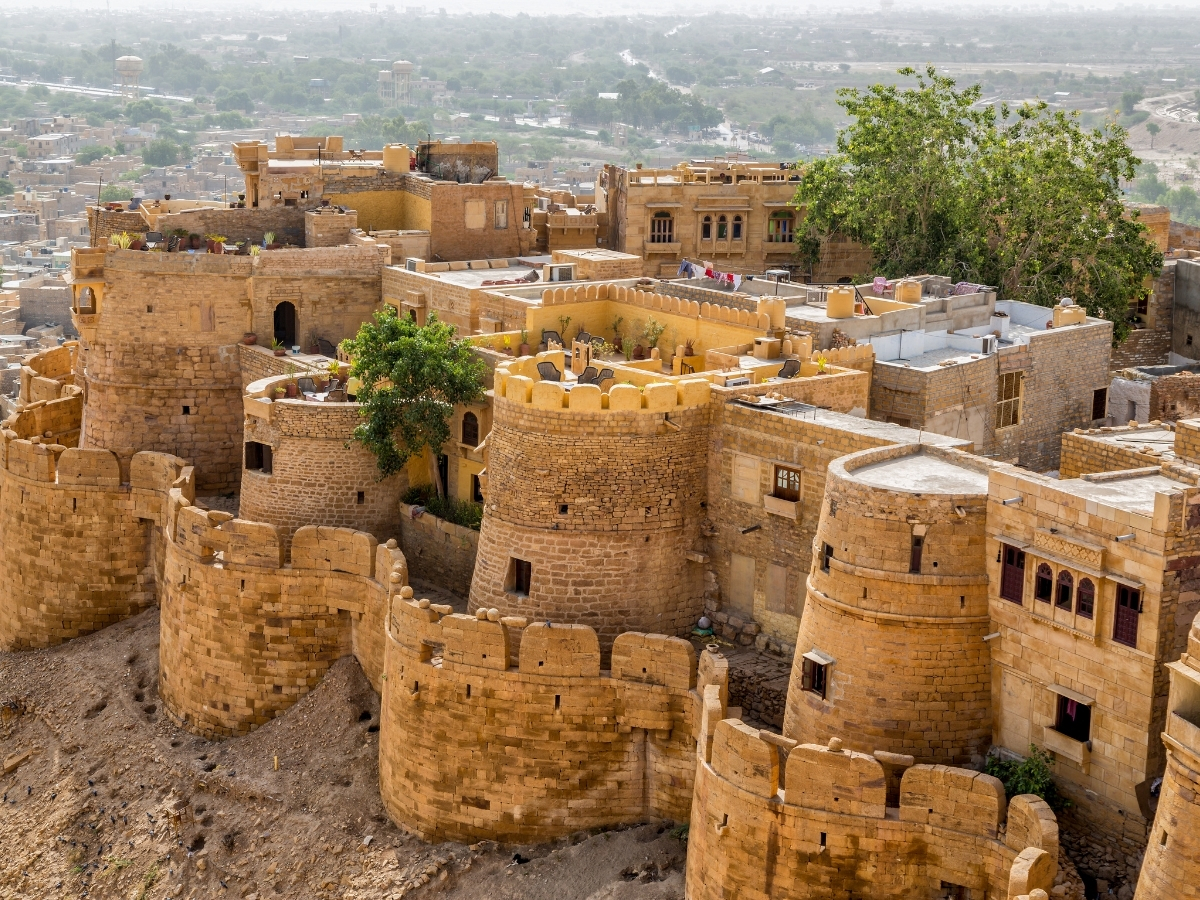
Rising 99 metres above the flat desert floor, Jaisalmer Fort is one of the largest and most magnificent forts in the world — and one of the very few forts on earth that is still fully inhabited. Within its massive sandstone walls live thousands of people, running hotels, restaurants, temples, and shops exactly as their ancestors did eight centuries ago. This is not a monument frozen in time. It is a city within a city, alive and breathing to this day.
Built in 1156 AD by Rawal Jaisal — the Bhati Rajput king after whom Jaisalmer is named — the fort stands on Trikuta Hill and has watched over the desert city for nearly 900 years. It was strategically positioned on the ancient Silk Route, and for centuries it served as both a military stronghold and a thriving trade centre, as caravans of merchants passed through carrying goods between India, Persia, and Arabia.
The fort's sandstone walls glow a deep amber in the morning and a warm gold at sunset — earning Jaisalmer its beloved title, the Golden City. As you approach, the scale of it is breathtaking. Massive bastions, intricate carvings, and towering gates announce a place built not just for defence but for magnificence.
Inside, the fort is a labyrinth of narrow cobblestone lanes, ornate Jain temples, royal palaces, ancient havelis, and busy little bazaars selling everything from silver jewellery to hand-embroidered textiles. Lose yourself in the lanes and around every corner you will find something that stops you in your tracks — a carved doorway, a rooftop view across the desert, a temple courtyard filled with the sound of bells.
The Raj Mahal — the Royal Palace inside the fort — is an architectural masterpiece of carved stone lattice screens, mirrored interiors, and royal chambers that speak to the wealth and sophistication of Jaisalmer's Rajput rulers. The Jain temples within the fort, built between the 12th and 16th centuries, are among the finest examples of temple architecture in Rajasthan — delicate, detailed, and deeply serene.
At sunrise, when the first light hits the fort's golden walls and the desert below is still in shadow, Jaisalmer Fort is one of the most beautiful sights in all of India.
Distance from Jaisan Haveli: Approximately 1.5 km
If Jaisalmer Fort is the soul of the Golden City, Patwon ki Haveli is its finest jewel. Standing in the narrow lanes just below the fort, this breathtaking cluster of five interconnected mansions is the largest, most elaborate, and most ornate haveli in all of Jaisalmer — a monument to the extraordinary wealth, artistry, and ambition of the merchant families who once called it home.
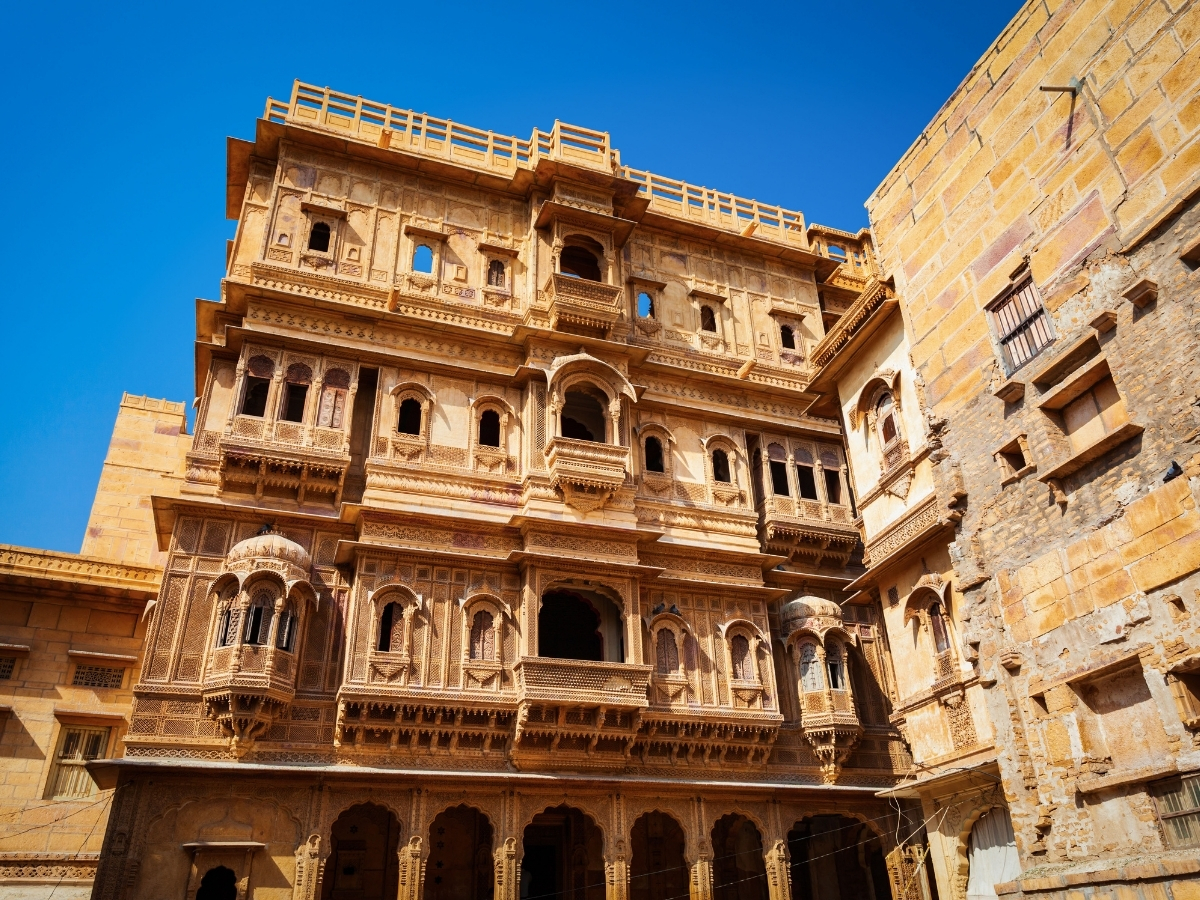
Patwon ki Haveli was built between 1800 and 1860 by Guman Chand Patwa, a wealthy brocade and jewellery merchant whose family grew rich on the trade routes that passed through Jaisalmer. Over six decades, he and his five sons each built their own grand mansion — and the result is an interconnected palace of golden sandstone so richly carved that it seems less like a building and more like an act of devotion to the craft of stone.
Every surface of Patwon ki Haveli tells a story. The façade alone — five storeys of intricately latticed jharokhas, floral friezes, elephant motifs, and geometric patterns — is considered one of the finest examples of Rajasthani stone carving in existence. The craftsmen who built these walls spent decades on their work, and it shows in every square inch. Look closely at any panel and you will find detail within detail within detail — a world of artistry compressed into golden stone.
Inside, the havelis open into courtyards, galleries, and chambers decorated with mirror work, murals, and carved pillars. One haveli has been converted into a government museum displaying textiles, paintings, and artefacts from the merchant era. Another is privately managed and open for exploration. Together they offer a vivid window into the life of Jaisalmer's merchant aristocracy at the height of the city's prosperity.
Walking through Patwon ki Haveli, it is easy to imagine the world that once existed here — the merchants in their embroidered coats, the courtyards full of trade goods, the smell of spices, and the sound of deals being struck in a dozen languages as the Silk Route hummed with life.
Best Time to Visit: Morning — the eastern light on the carved facade is spectacular and the lanes are quieter before midday.
Distance from Jaisan Haveli: Approximately 2 km
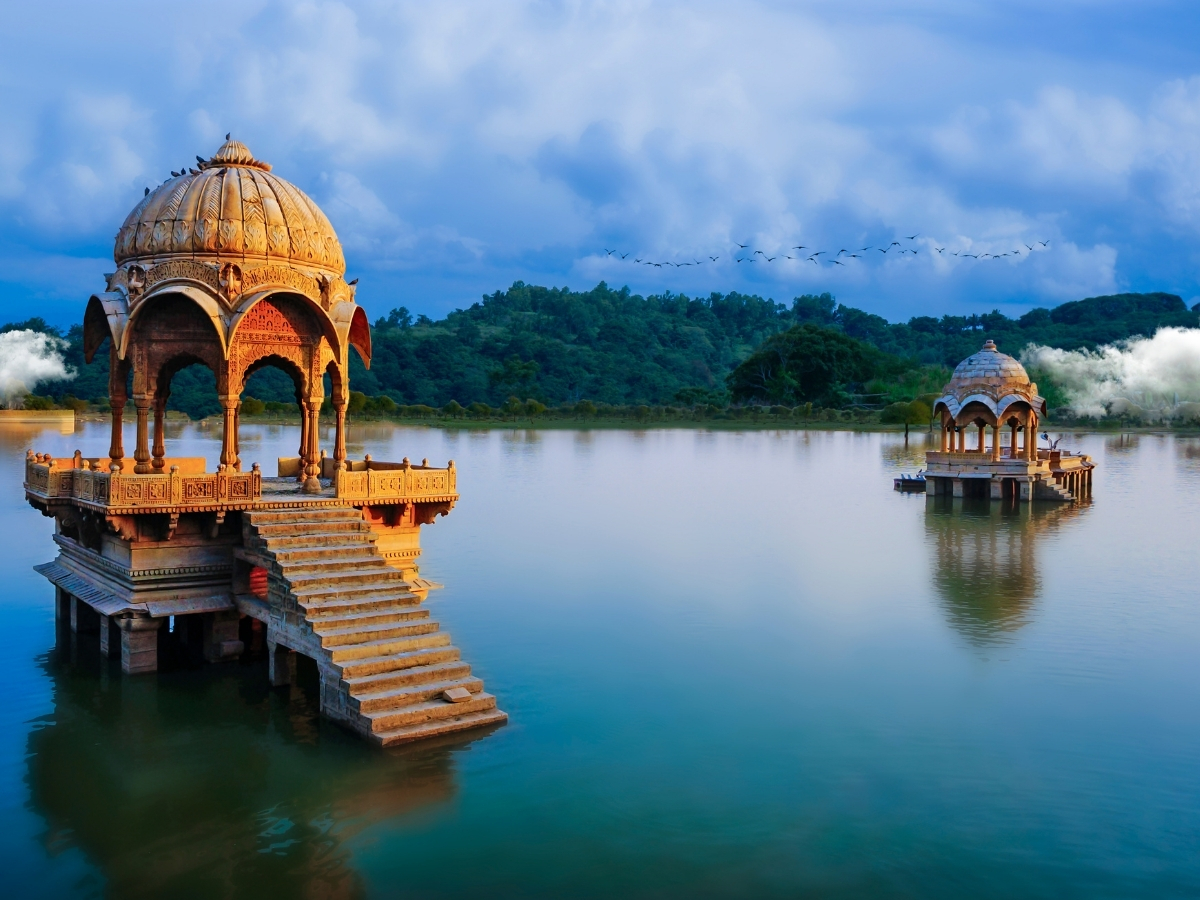
In a city built on the edge of one of the world's great deserts, Gadisar Lake feels like a quiet miracle. Surrounded by golden sandstone temples, ornate ghats, and ancient chhatris that rise from the water's edge, this serene man-made lake has been the soul of Jaisalmer for over 600 years.
Gadisar Lake was built in 1367 by Maharawal Gadsi Singh as a rainwater reservoir — the primary water source for the entire city of Jaisalmer for centuries. In a land where water was more precious than gold, this lake was not just a reservoir. It was life itself. Kings, merchants, priests, and ordinary families all depended on its waters, and over the centuries they expressed their gratitude by lining its banks with shrines, temples, and pavilions of extraordinary beauty.
Today, Gadisar Lake is one of the most atmospheric and photogenic spots in all of Rajasthan. The water reflects the golden architecture that surrounds it. Migratory birds settle on its surface through the winter months. Fishermen cast their nets in the early morning silence. And at sunrise and sunset, the lake transforms into something almost otherworldly — still water, golden stone, and a sky painted in colour.
A boat ride on Gadisar is among the most peaceful experiences Jaisalmer offers. Glide across the calm water, take in the temples and cenotaphs from the surface, and let the stillness of this ancient lake settle over you. It is a world apart from the busy lanes of the fort above.
The entrance to the lake is marked by the magnificent Tilon ki Pol — a gateway built by a royal courtesan who, legend has it, constructed it so grand that the king could not tear it down. The gateway stands to this day, beautifully carved and full of stories.
Best Time to Visit: Sunrise or sunset — the light on the water and sandstone is extraordinary at both ends of the day.
Contact Us
+91 8952986390+91 8952986390 jaisanhaveli@gmail.com
 Nagar Parishad, Bera Rd, Postal Colony, Jaisalmer, Rajasthan 345001